

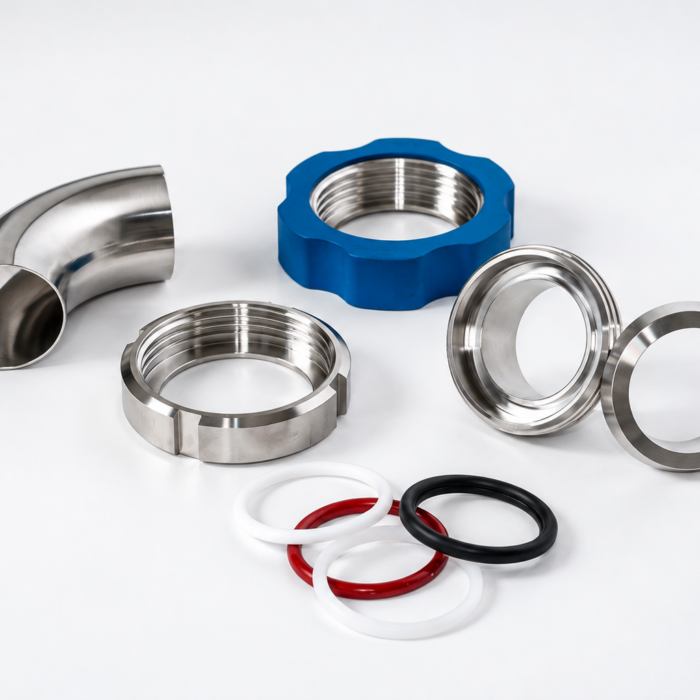
DIN 11851 in the food industry: fittings, gaskets and areas of application
Anyone who works in a dairy, winery, or beverage plant...
Anyone who works in a dairy, winery, or beverage plant...
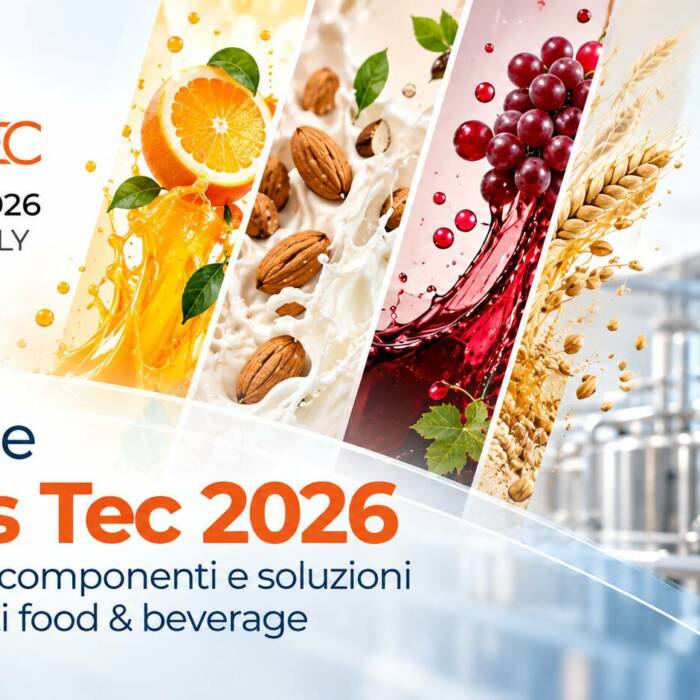
From October 27 to 30, 2026, Fiere di Parma will host Cibus Tec, the...
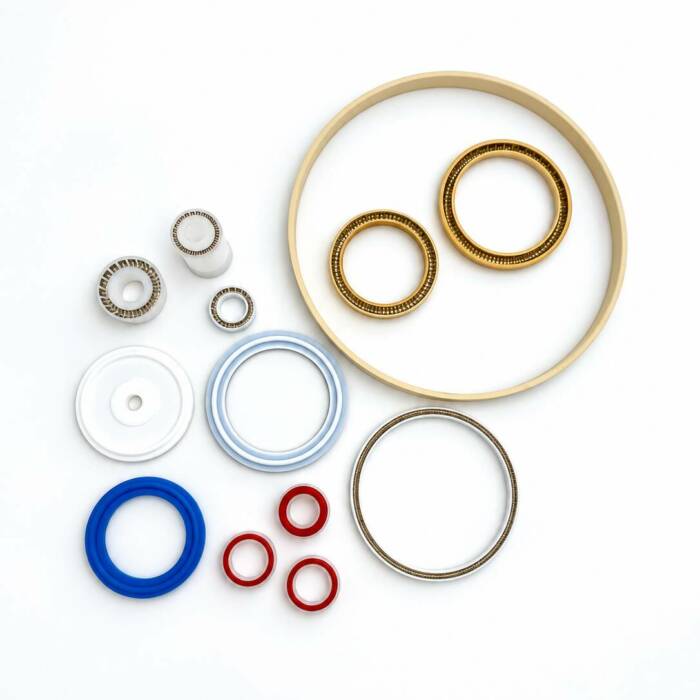
PTFE (polytetrafluoroethylene) is the leading fluoropolymer for industrial seals...
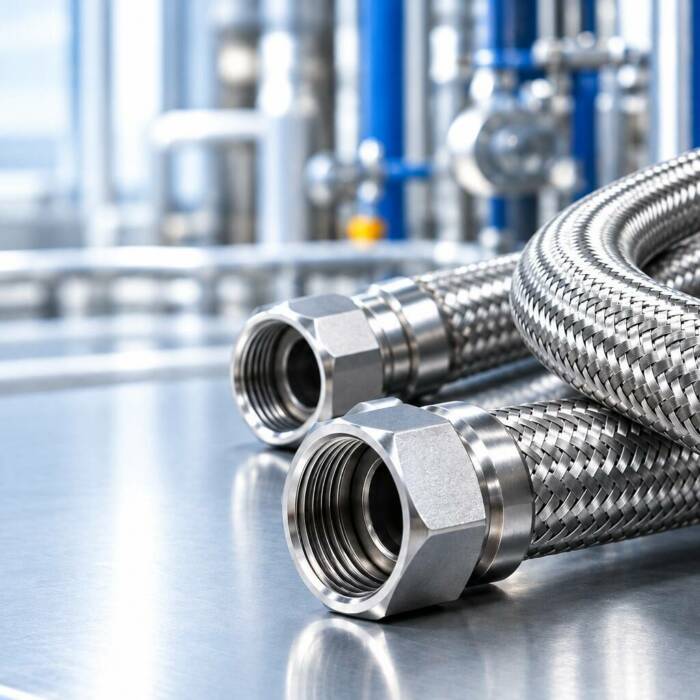
When a system must convey steam, technical gases, cryogenic fluids, or aggressive chemicals,...
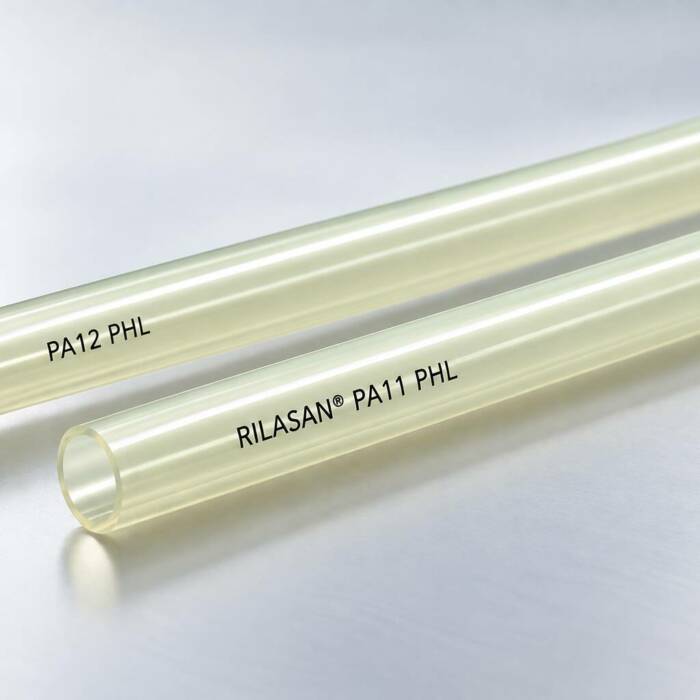
When designing a pneumatic circuit or replacing a pipe...
In the winemaking industry, the quality of the final product isn't decided solely in the vineyard or during fermentation. Wine is a living, delicate, and reactive fluid: every single instrument that comes into contact with it along the transfer chain can determine its success or failure.
Flexible food hoses and winemaking fittings are the true arteries of the winery. Choosing the right solution is the first step to preserving the aseptic process and the organoleptic identity of each individual bottle.
When handling must, wine, or fine spirits, the hose is subjected to constant stress: pumping pressure, tight bends, passage of chemical detergents for sanitization, and thermal stress.
Every winery, large or small, sooner or later finds itself faced with a strategic choice: PVC pipe or rubber pipe ? These are two distinct purchasing philosophies, with different economic, operational, and quality implications. Let's look at them in detail.
The choice of material determines the cellar's very efficiency. The comparison between the immediacy of PVC and the durability of rubber presents two options that respond to completely different business and operational logics.
Food-grade PVC pipes (like our Nevada and Enoflex models ) represent an effective tactical solution. This option is ideal for those who manage seasonal operations, low-volume facilities, or secondary movements.
→ Immediate advantages: It guarantees a low purchase cost, immediate availability on the market and full food compliance required by current regulations.
→ Operating Limits: In the medium term, PVC shows greater vulnerability to wear. It tends to stiffen at low temperatures and is subject to cracking and premature aging when exposed to the chemical detergents typical of winemaking. This requires frequent maintenance and periodic replacement.
Adopting food-grade rubber hoses (such as Alcodial , Millesime , Citeridial , Trellvin and Vinitrell ) means looking at the overall profitability of the winery, optimising the total cost of managing the system.
→ Superior mechanical performance: The rubber ensures excellent chemical and structural resistance. It maintains its flexibility even during the harshest winter operations, preventing bottlenecks and making the operator's job easier.
→ Hygiene and organoleptic protection: Withstands intensive CIP cleaning and high-temperature sterilization. The material's stability guarantees absolute neutrality: the wine preserves its unique characteristics intact, without any risk of contamination.
→ Economical efficiency: The higher initial price is quickly amortized. Its long-lasting durability drastically reduces the frequency of purchases and downtime caused by breakdowns, proving to be the most convenient and safe choice for wineries aiming for excellence.
Each stage of the winemaking process requires specific characteristics. The Universalflex catalog offers targeted solutions, compliant with European and international food contact regulations ( MOCA and FDA ).
Helically reinforced rubber hoses, designed for the most demanding phases of grape harvesting and must transfer. They offer impeccable vacuum resistance during suction and can withstand high pressure peaks during delivery, protecting the line from accidental crushing.
Flexible hose designed for transferring spirits and liqueurs with high alcohol concentrations. Its secret lies in the inner liner made of UPE, an advanced technopolymer featuring a completely non-porous internal surface. This molecular structure prevents alcohol from attacking the hose and prevents the release of foreign odors or flavors, ensuring chemical and organoleptic purity.
EPDM hose designed for wineries that adopt stringent cleaning and sterilization protocols. In addition to ensuring absolute organoleptic neutrality during the passage of wines and musts, it perfectly tolerates steam sanitization cycles up to +140°C, offering a structural lifespan superior to standard compounds.
The most flexible rubber hose in the Universalflex range. Its exceptional elasticity makes it particularly suitable for situations where maneuvering space is limited or where the hose must be moved frequently during cellar operations.
Reinforced food-grade PVC hose certified for food contact. It's the perfect choice for those seeking a lightweight, economical, and readily available solution for standard applications, low-pressure transfers, or seasonal uses.
The fitting represents the true technological heart of fluid transfer. The junction between the flexible hose and the fixed system is where the greatest mechanical stress and the greatest risk of biological contamination are concentrated.
Universalflex responds to this critical issue with a customized internal service, configuring connection systems according to excellent production standards:
| Typology | Description | Ideal application |
| Bulk tube | Supplied by the meter, without fittings. Maximum cutting flexibility. | Cellars with internal workshop or independent maintenance personnel. |
| Garolla Connected | Permanent mechanical connection via pressure stapling (Garolla fittings). Eliminates dead spots. | Cellars that require absolute hygiene standards and resistance to stress |
| DIN connector | Fittings according to DIN (German standard), widespread in the European wine sector | Systems with DIN connections on pumps, tanks and valves |
| Assembled with half-shells | External bolted mechanical fastening. Robust and reusable. | Standard lines where the fitting needs to be periodically dismantled. |
| Mounted with hose clamps | Traditional connection with clamps, screws, or quick-release. Economical and versatile. | Less hygienically critical applications or temporary uses |
Of all the types of fittings, crimping represents the highest standard for the quality wine industry. Unlike traditional clamps, which leave interstitial spaces where bacteria and residue can accumulate, crimping creates a hermetic seal between the pipe and the fitting, eliminating any risk of contamination and ensuring:
Safety: Elimination of the risk of sudden slipping of the fitting
Our technical team suggests evaluating six essential variables before purchasing:
The Universalflex technical team is available to assist each winery in choosing the most suitable product, with personalized advice and the option of creating custom-fitted pipes based on the specific needs of the system.
Universalflex offers both solutions to adapt to the operational logic of any winery . The loose pipe is ideal for those with in-house equipment and who want to manage cutting and assembly completely independently. The pre-assembled pipe is a turnkey solution, assembled in Universalflex with millimetric tolerances and ready for immediate use in complete safety.
We put our experience in the Food & Beverage sector to work for your winery to ensure safe transfers that comply with MOCA and FDA regulations.
What is the difference between a PVC pipe and a rubber pipe for winemaking use?
PVC pipe is a cheap and readily available food-grade material, but it tends to deteriorate more quickly, especially when in contact with alcohol and chemicals used in winemaking processes. Rubber pipe, while initially more expensive, offers longer life, better chemical resistance, aseptic product transport, and lower medium- to long-term maintenance costs.
What is meant by stapling a wine tube?
Stapling is a mechanical process of radial pressing with millimeter precision. Using special hydraulic machines, the steel fitting is permanently joined to the rubber, creating a single body. This system eliminates empty spaces between the parts, prevents wine from stagnating, eliminates bacterial growth, and withstands the most severe pressure peaks.
What is the most flexible hose for cellar use?
The Citeridial model is the most flexible and ergonomic rubber hose in the Universalflex catalog. It is specifically designed to facilitate the work of operators in confined cellar spaces, withstanding tight bends, twists, and continuous dragging without becoming kinked.
What are Garolla and DIN fittings used in winemaking?
The Garolla fitting is the historic and most widespread standard in Italian winemaking, appreciated for its quick connection via a lever ring. The DIN system, on the other hand, complies with a European standard (of German origin) based on a threaded connection with a swivel, common on modern process systems, pumps, and the latest generation of tanks. Universalflex assembles both configurations in-house.
Is it possible to purchase custom-fitted wine pipes?
Yes, it's a flagship service offered by our in-house workshop. We configure ready-to-use pipes, cut to the precise length requested by the customer, and attach the specific fittings required for the cellar's layout. Each piece is delivered tested and ready for installation.
Do Universalflex winemaking hoses comply with food regulations?
Yes, the entire winemaking range strictly complies with European and international food contact requirements. Universalflex provides all MOCA declarations of conformity (EC Regulation 1935/2004) and FDA certifications , ensuring the legal and health safety of your winery.
How often should a basement hose be replaced?
It depends on the material and the intensity of use. A PVC hose subjected to continuous use or contact with alcohol may need replacing after one or two harvests. A quality rubber hose, properly connected and maintained, can guarantee reliable performance for many years, significantly reducing overall maintenance costs and the risk of sudden failures during critical processing stages.
Anyone who works in a dairy, winery, or beverage plant...
From October 27 to 30, 2026, Fiere di Parma will host Cibus Tec, the...
PTFE (polytetrafluoroethylene) is the leading fluoropolymer for industrial seals...
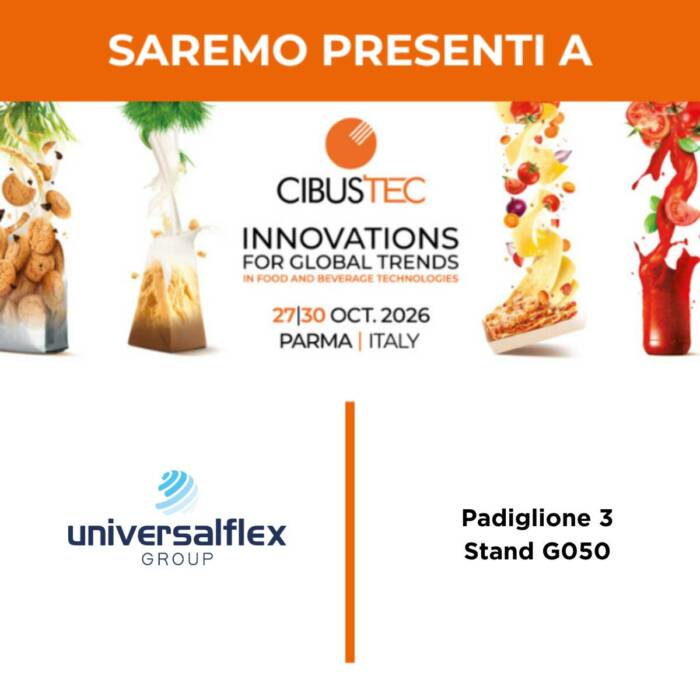
🚀 We're ready for Cibus Tec 2026! From October 27th to 30th, we'll be there...
When a system must convey steam, technical gases, cryogenic fluids, or aggressive chemicals,...
Adding {{itemName}} to cart
Added {{itemName}} to cart


