

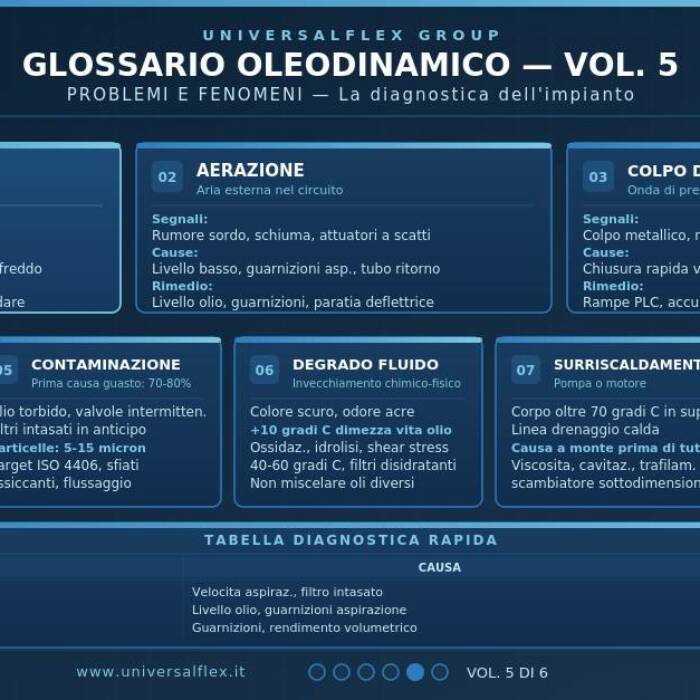
Hydraulic Glossary Vol. 5: Problems and Phenomena – System Diagnostics
In previous volumes of our Hydraulic Glossary, we built a system piece by piece:...
In previous volumes of our Hydraulic Glossary, we built a system piece by piece:...
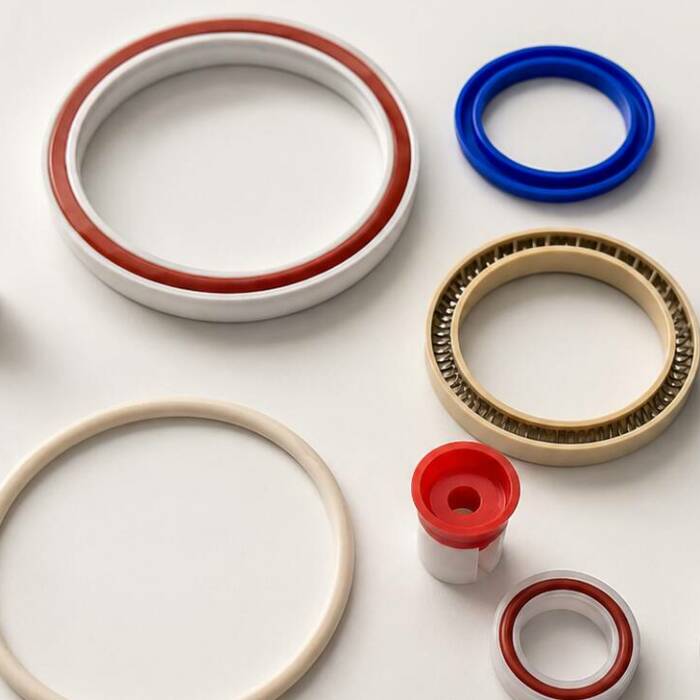
A gasket with a standard profile works in most industrial applications. However, there are...
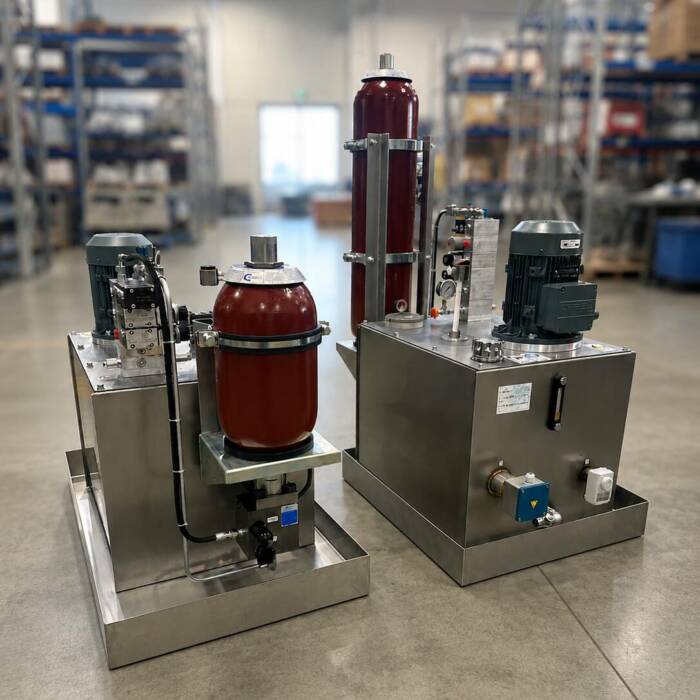
A standard hydraulic system covers most industrial applications at a low cost...
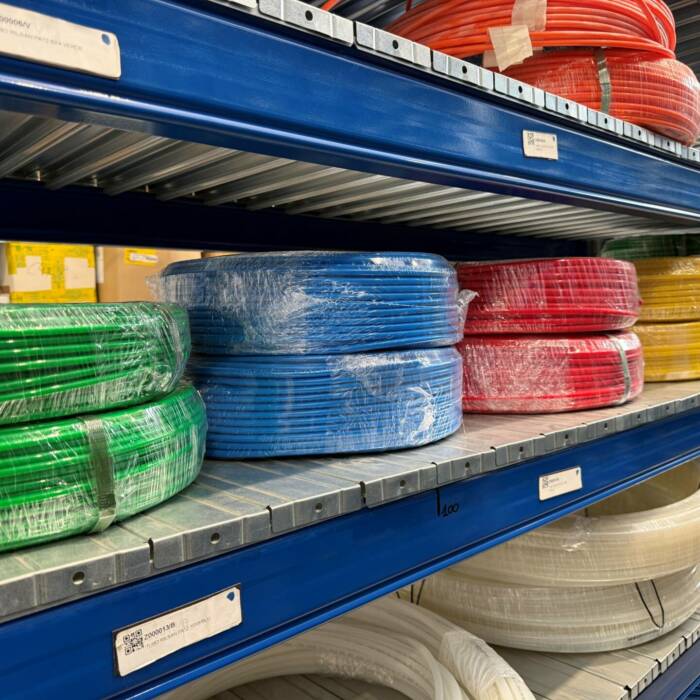
In the industrial sector, choosing a plastic hose is never...

In previous volumes, we analyzed components, valves, and technical parameters. In this fourth chapter...
When it comes to sealing in industrial systems, choosing the right gasket material is one of the most critical decisions of the entire project. An error at this stage can result in leaks, contamination, premature failure, or costly production downtime. Yet, in everyday practice, we often tend to choose "the usual material" without carefully evaluating the specific operating conditions of the application.
In this article, we guide you through the main materials used for the production of industrial gaskets—NBR, PTFE, FKM, EPDM, Silicone, HPU, and HNBR—illustrating each material's characteristics, strengths, and most suitable applications.
A gasket is not simply a rubber ring or disk: it is a technical component designed to withstand specific conditions of pressure, temperature, chemical aggression, and mechanical movement. The material it is made of determines:
The wrong choice of material can lead to swelling, loss of elasticity or surface cracking of the gasket — resulting in loss of sealing and risks to the system or safety.
Below we present the most commonly used materials in the production of turned and commercial gaskets, with their respective distinctive characteristics.
The NBR (Nitrile Butadiene Rubber) It is one of the most widely used elastomers in the industry, thanks to its excellent balance between performance and cost. It is the material of choice whenever the main problem to be addressed concerns the presence of mineral oils, lubricants and greases.
Strengths:
Limitations: Not suitable for high temperature, ozone, UV or polar solvent applications. Not compatible with DOT brake fluids and hot water glycol.
Recommended applications: hydraulic systems with mineral oils, compressors, engines, hydraulics, industrial pneumatics.
The HNBR (Hydrogenated Nitrile Butadiene Rubber) It is the hydrogenated version of NBR, obtained through a hydrogenation process that makes it significantly higher performing in terms of maximum operating temperature and chemical resistance.
Strengths:
Recommended applications: automotive (engine systems, transmissions), oil industry, compressors with aggressive fluids, applications where standard NBR shows signs of premature degradation.
Il PTFE (Polytetrafluoroethylene)Teflon®, also known as Teflon®, is the material with the broadest spectrum of chemical resistance among those used for gaskets. Virtually inert to almost all chemicals, it is the ideal solution for highly aggressive environments and high-temperature applications.
Strengths:
Limitations: PTFE is a material drive Compared to elastomers, it has no inherent elastic memory and is therefore less suitable for dynamic applications or where continuous elastic deformation is required. In these cases, it is often used in combination with an internal energizing element (as in patented seals). Aseptic Infinity of Universalflex, where PTFE is combined with a silicone core).
Recommended applications: chemical and petrochemical, pharmaceutical, food industries (it is FDA/MOCA certifiable), cryogenics, steam applications.
The FKM (Fluoroelastomer, commercially known as Viton®) combines the features that are often required together in the most demanding applications: resistance to high temperature and wide chemical compatibility, while maintaining good elastomeric softness.
Strengths:
Limitations: higher cost than NBR or EPDM; can degrade in contact with ammonia, amines and some polar fluids.
Recommended applications: chemical industry, automotive (high-performance engines), aerospace, oil industry, applications with superheated steam or hot aggressive fluids.
The EPDM (Ethylene Propylene Diene Monomer) It is the reference elastomer whenever the application involves exposure to weathering, ozone, UV rays or to aqueous fluids such as brake fluid (glycol-based DOT oil)It is also one of the most widely used materials for food sealants thanks to its FDA/MOCA compliance.
Strengths:
Limitations: not compatible with mineral oils and hydrocarbons — this is its main limitation.
Recommended applications: Sanitary and water treatment systems, braking systems, food and beverage industry, outdoor applications, heating and cooling systems with glycol water.
Il Silicone (MVQ – Methyl Vinyl Q) It is the preferred material when the application requires the combination of high temperature e contact with food or drugs. It is one of the few materials that can be certified for food use while maintaining excellent thermal performance.
Strengths:
Important limitations: silicone has poor mechanical and abrasion resistance compared to other elastomers. It is not suitable for dynamic, cyclic applications or where there is relative movement between surfaces. It is optimal for static applications: fixed gaskets, stationary O-rings, flange seals in food or pharmaceutical plants.
Recommended applications: food industry (seals for valves, fittings, tanks), pharmaceutical and cosmetics, medical equipment, industrial ovens, high-temperature static seals.
The HPU (Hydrolysis-resistant Polyurethane) It is a material of a different nature compared to classic elastomers: it is not a rubber, but a technical polymer with much superior mechanical properties. It is the ideal solution when the main problem is the resistance to cutting, abrasion and wear in presence of high speeds or intense movement cycles.
Strengths:
Limitations: less suitable in the presence of strong chemical agents or very high temperatures; not suitable for contact with prolonged very hot water or steam.
Recommended applications: Hydraulic movement cylinders, linear guides, heavy handling equipment, any application where abrasion and wear are critical factors.
In practice, the choice of material always starts from the analysis of the main problem or criticality of the application. The following table provides a quick orientation:
| Problem / Condition | Recommended material | Note |
| Mineral oils and fats | NBR | Economical and versatile solution |
| Oils + higher temperatures or aggressive chemicals | HNBR | Evolution of NBR for extreme conditions |
| Universal chemical resistance | PTFE | Rigid material; evaluate combination with energizer |
| High temperature + chemical compatibility + elasticity | FK extension | Softer than PTFE, great all-in-one choice |
| Weathering, ozone, brake fluid, water | EPDM | Not compatible with mineral oils |
| Static food/pharmaceutical applications | Silicone | Avoid for dynamic applications |
| Intense abrasion, high speed, extreme dynamism | HPU | Superior to any elastomer for wear |
It is important to remember that the choice of material is never separated from other parameters:
The geometry of the gasket influences the sealing capacity and the distribution of contact pressures. The type of mating (static or dynamic, with or without sliding) determines which material is able to last over time. The roughness of surfaces contact can accelerate the wear of less resistant materials. The required certifications (FDA, MOCA, pharmaceutical, ATEX) can significantly narrow the range of permissible materials.
For this reason, at Universalflex we always support our customers during the selection phase, integrating our knowledge of materials with our design experience in specific industrial applications.
Q: How do I know if my current gasket is made of the correct material? A: The most common signs of material incompatibility are: swelling (swelling) of the seal in contact with the fluid, hardening and surface cracking, loss of elasticity, exfoliation, or permanent deformation. If you notice any of these phenomena before the expected end of life, it's likely that the material is not optimal for that specific application. Our technical team can analyze the problem and propose a solution.
Q: Can I use the same material for all the gaskets in a system? A: Generally, no. A complex system may have sections with different fluids, temperatures, and dynamics. In many cases, NBR, EPDM, and PTFE seals coexist in the system, each in the correct location. Mapping the operating conditions for each sealing point is the first step to making the right choice.
Q: What is the difference between FKM and PTFE? A: Both offer high chemical and thermal resistance, but with different characteristics. FKM is a elastomer: it is soft, elastic and adapts well to contact surfaces - therefore also excellent for dynamic applications. PTFE is a thermoplastic: it is much more rigid, has virtually absolute chemical resistance and an even wider thermal range, but has no inherent elastic memory. They are often used in combination (for example, a PTFE gasket with an FKM O-ring as an energizer).
Q: Is silicone suitable for moving seals? A: No, silicone is not suitable for dynamic applications. It has poor abrasion and cut resistance. Its optimal use is in static applications where high temperatures and/or food certification are required. For similar applications but with movement, FKM or HPU are considered depending on the fluid.
Q: What is chemical compatibility and where can I check it? A: Chemical compatibility indicates a material's ability to withstand contact with a specific fluid or chemical without degradation. It is typically expressed on a quality scale (excellent/good/poor/incompatible). Universalflex provides chemical compatibility guides and technical support for specific assessments:contact us.
Q: Are there any materials certified for food use among those mentioned? A: Yes. Various materials can be produced in formulations certified for food contact according to FDA (USA) and MOCA/EC 1935/2004 (Europe) regulations. In particular: EPDM, Silicone, FKM and PTFE They are available in food versions. Also NBR It may have FDA variants in some specific colors (e.g., light blue). Certification depends not only on the base polymer but also on the specific compound used: for each food application, it is essential to request the relevant compliance documentation.

We inform our customers and partners that Universalflex offices will be closed for...
In previous volumes of our Hydraulic Glossary, we built a system piece by piece:...
A gasket with a standard profile works in most industrial applications. However, there are...
A standard hydraulic system covers most industrial applications at a low cost...
In the industrial sector, choosing a plastic hose is never...
Adding {{itemName}} to cart
Added {{itemName}} to cart


